The Ghost in the Rearview Mirror
A Retrospective from an Old Pilot
Empires die twice. Once when they collapse, and once when someone tries to rebuild them from the original blueprints — and discovers the blueprints only ever worked because of everything the builder has already strip-mined for parts.
Margin notes check the numbered phrases. Source: the record agrees. Correction: it differs. Echo: an allusion. Voice, Term, Reading: who speaks, what a word means, how a line reads. The letter’s words are unchanged.Tap a numbered phrase to open its note. Source: the record agrees. Correction: it differs. Echo: an allusion. The letter’s words are unchanged.
To the citizens of a Republic standing at a crossroads1 with a crowded rearview mirror,
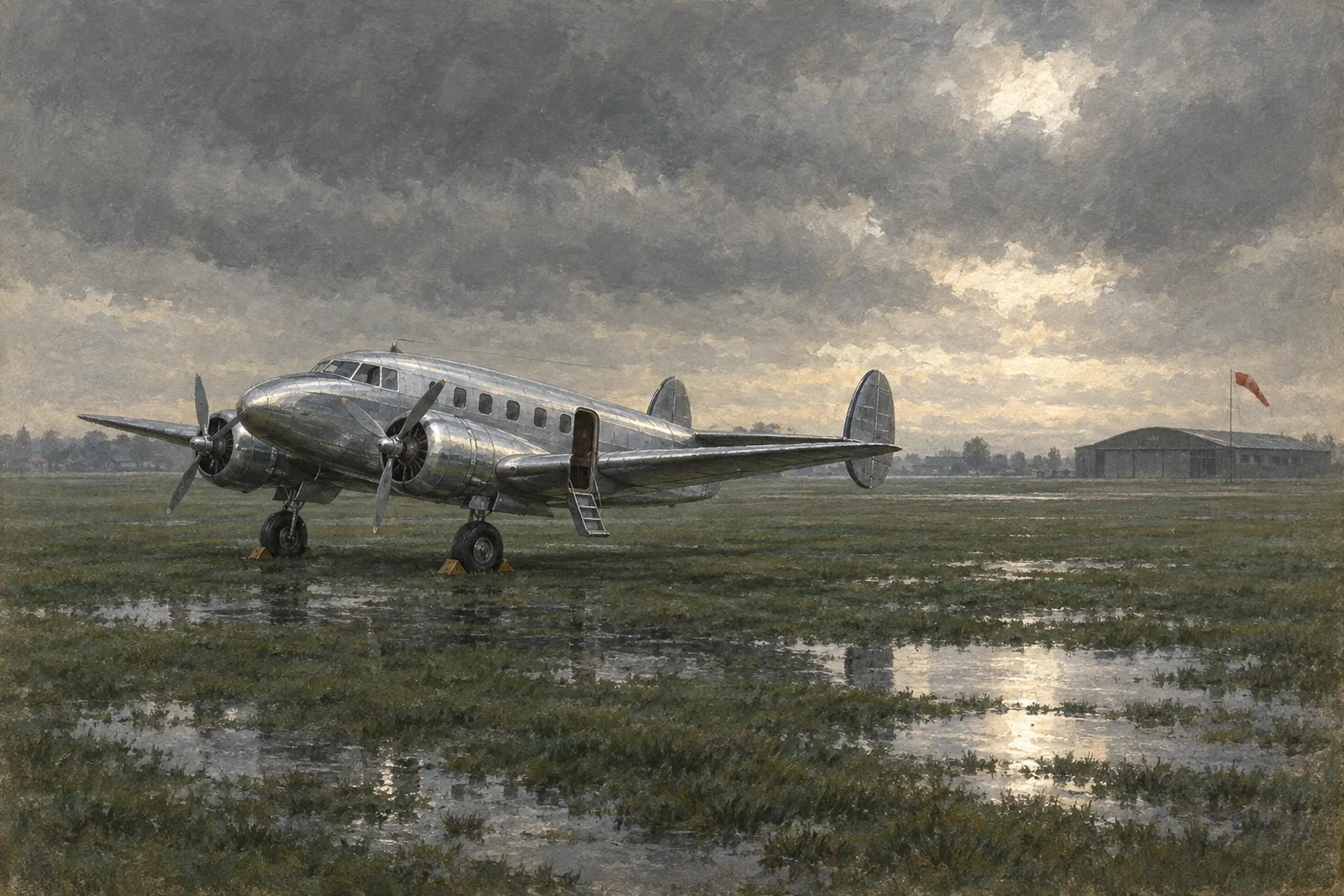
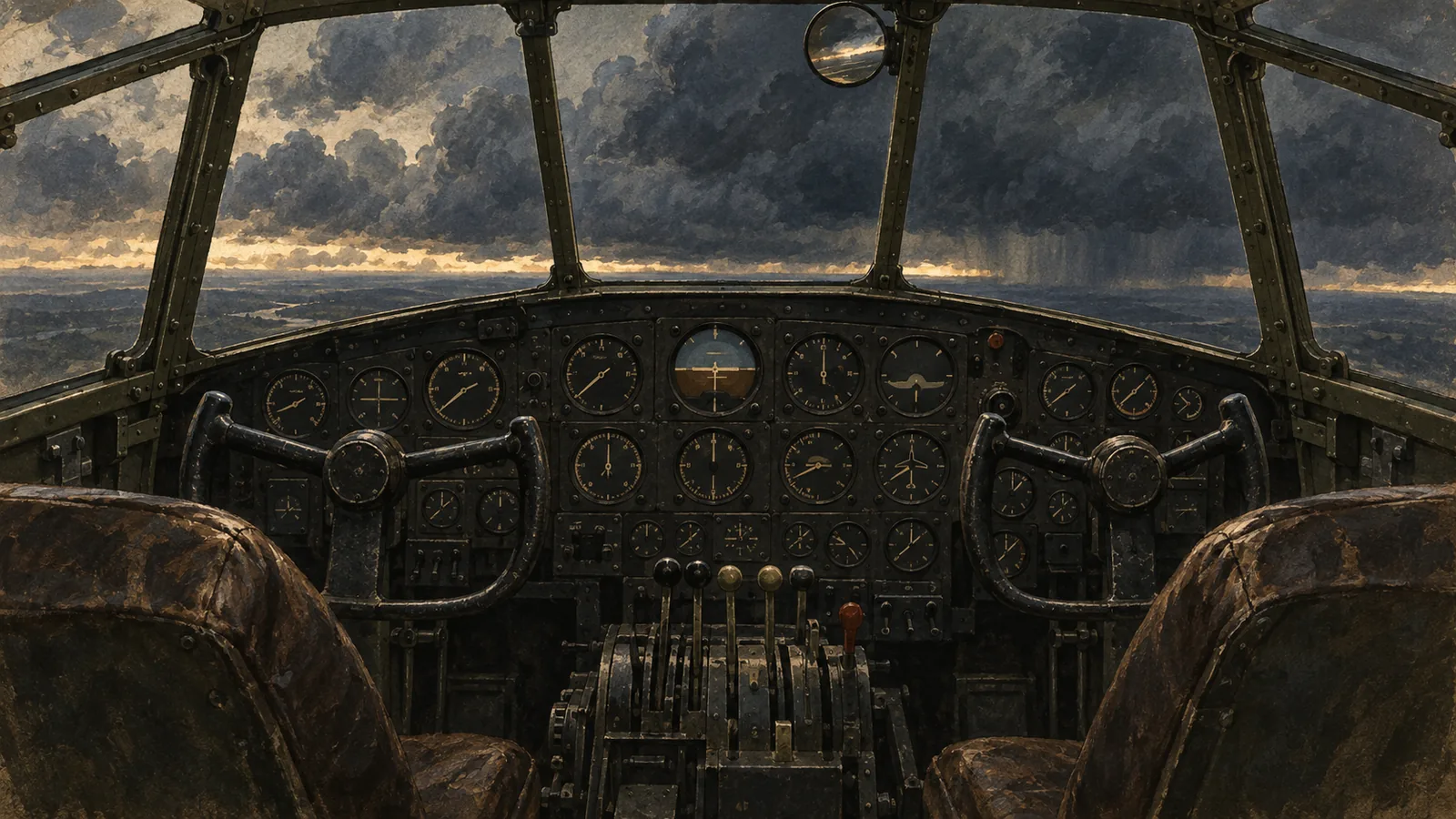
You have asked me to look backward — over thirty years of the world's ledger — and tell you what I see. Very well. An old pilot who has flown through weather tells you the truth of it: the windshield shows you where you are going, but the instruments tell you whether you are flying level. I have spent these pages reading the instruments. I regret to report that several of them are reading the same numbers they read the last time the plane went into a spin.
What follows is not a history lesson. It is a warning written by a man who watched one empire die of delusion, and who now watches another people — my own people — flirting with the same delusion wearing a different uniform. The Soviet Union was not defeated on a battlefield. It rotted from a lie it could no longer afford. That is the only fact you need to carry through everything that follows.
I. The Empire That Died Twice
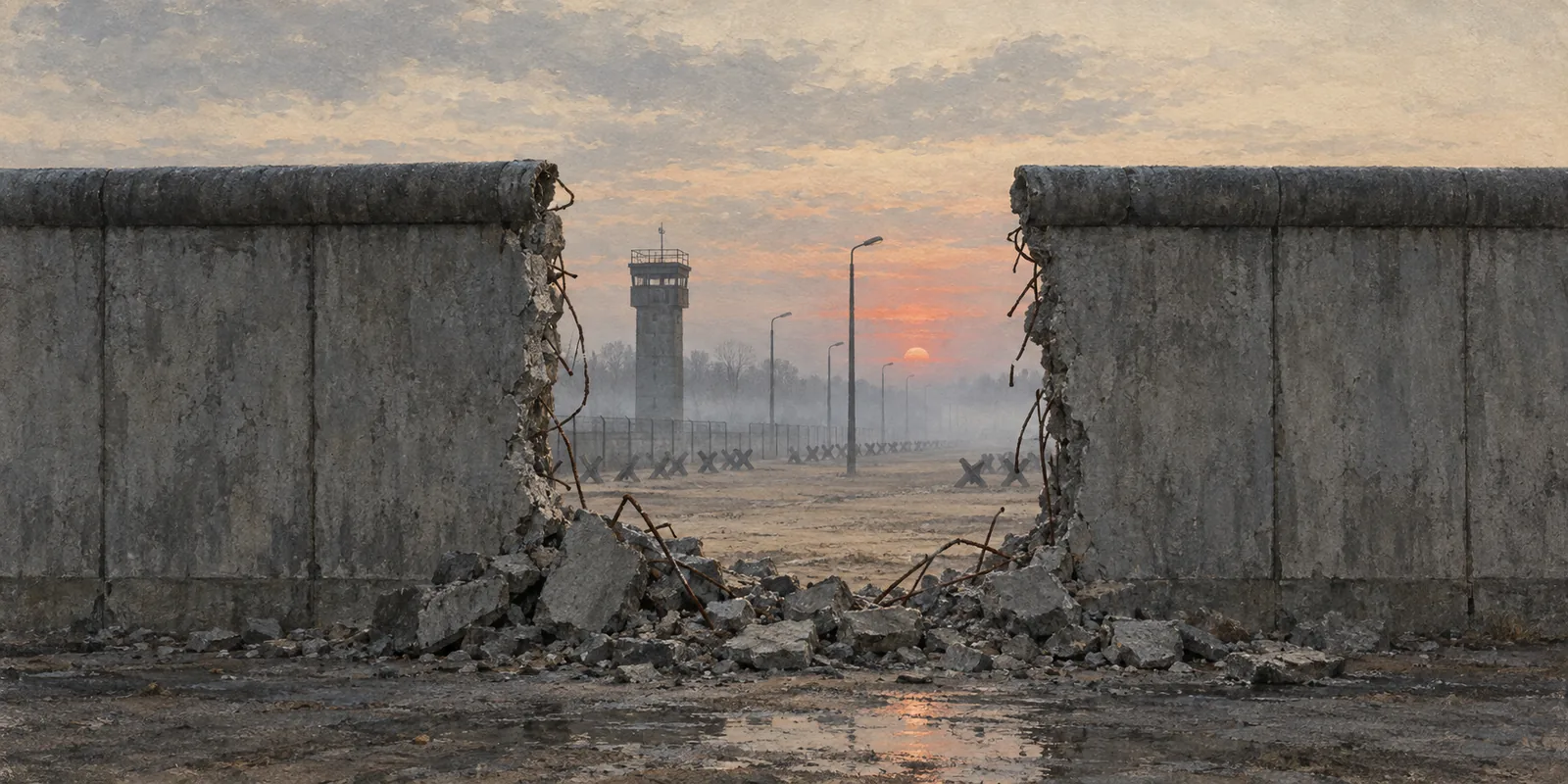
When the Soviet Union collapsed, half a continent exhaled for the first time in seventy years. Poland breathed free. The Baltic states walked out of the prison yard. A wall came down with hammers, with bare hands, with an entire generation's worth of patience finally spent. It was one of the great emancipations in human history — and the free world, to its everlasting peril, chose to read it not as a liberation but as a conclusion. The intellectuals declared "the end of history."2 The victors threw themselves a party and, in the fog of the celebration, mistook an intermission for the final curtain.
Understand this clearly: the empire died, but the men who ran it did not evaporate. They did not repent. They filed out of one building and queued up to enter the next. Among them was a middling officer of the security services who, in the years that followed, would stand before the world and call the collapse of that prison-state "the greatest geopolitical catastrophe of the century."3
Not the war that killed tens of millions. Not the famines. Not the gulags. The catastrophe, in his telling, was the moment the empire lost its subjects.
That is a confession, plain as a church bell.Because you and I know what to call a man who mourns the loss of the estate rather than the suffering of the people on it. We called him a plantation owner once. We called him a commissar. The uniform changes. The accounting does not.
II. Paper Without Fleets
In 1994, the third-largest nuclear arsenal on Earth4 sat on Ukrainian soil — thousands of warheads, an inheritance nobody had asked them to administer. And the architects of Western diplomacy, flushed with the end-of-history cocktail, convinced Kyiv to hand the entire arsenal over to Moscow in exchange for a memorandum. A piece of paper. Signatures promising "security assurances." Respect for borders. Territorial integrity.
I signed the Atlantic Charter5 with Winston Churchill in the middle of a war-torn ocean in 1941, and I will tell you what every statesman of my generation knew in his bones: a charter is worth precisely the fleet you are willing to put behind it. Winston and I did not stop at parchment. We built the destroyers, the Liberty ships, the bombers. Lend-Lease was not a promise;6 it was a shipment.
Budapest was a promise with no shipment. And a paper guarantee without a fleet behind it is not a shield. It is an invitation — engraved, gilded, and addressed directly to the appetite of any man who believes the paper's authors have grown too comfortable to enforce it.
III. The Appetizer and the Main Course
The invitation was answered in 2014. The tiger tested the fence in broad daylight — a peninsula seized, a border redrawn by force for the first time in Europe since my war,7 and a fire stoked in the Donbas to keep the burn slow. And how did the free world respond? Statements of "deep concern." Sanctions calibrated to bruise but never to break. A refusal to send the weapons that would let the victim fight, out of terror of a word: escalation.
I watched this movie in the 1930s, and I can recite the dialogue. When the Rhineland was remilitarized, the world said: well, it is his backyard anyway. When Austria was swallowed, they said: perhaps he will be satisfied now. When the Sudetenland was carved away, a man stood at an airport window, waved a scrap of paper, and called it peace in our time.8
When you allow an aggressor to take the appetizer without breaking his fingers, you do not purchase peace. You purchase a reservation for the main course — at a hundred times the price.The main course was served in February 2022. It was not a surprise. It was the mathematical certainty of eight years of vacillation. Moscow looked at 2014, measured the West's hesitation, and concluded the Republic no longer had the stomach for a long, grinding fight. And when the Ukrainian people refused to run, they proved the lesson of Lend-Lease all over again: give a brave, free people the tools to defend their own soil, and they will fight like lions. But the cost of stopping the aggression in 2022 was set, in full, by the hesitations of 1994 and 2014. Deterrence deferred is deterrence multiplied — against you.
IV. The Resurrection Project
Now let me name the engine of all three dates, because chronology without diagnosis is bookkeeping.
The man in the Kremlin is not a communist. Marx is a costume that has been mothballed. What he wants is the thing Marx merely happened to sit on top of: the territory, the buffer states, the subject peoples, the old imperial map with a fresh coat of paint. He gutted every check on his own power and rebuilt a one-man autocracy — a new nobility of oligarchs where the commissars used to stand. He restored the security services to the throne of the state. He brought back the processions, the parades, the whole liturgy of steel. He is not governing a country. He is curating a museum with a gas pump.
And that is why Ukraine. It was never about NATO. Never about the coal. Ukraine is the keystone of the resurrection: without Kyiv there is no empire, only a vast, rich, rotting nation of eleven time zones ruled by one frightened man and his thieves. That is why he wrote his thousand-word essay9 arguing that Ukraine has never existed, that its people are a fiction, an accident, a wayward province. Every empire writes that essay about every nation it intends to swallow. You do not write a thousand words proving your neighbor does not exist unless you have already decided to take his house.
Mark the bitter joke, though. His crusade to revive the empire is precisely what is killing it. He fights the war with shells pulled from Soviet-era bunkers and tactics we buried at Passchendaele,10 because the one thing he could not resurrect was competence. Empires are not resurrected. They are only repeated — and always by men who mistook the empire for the country, and the country for themselves.
V. The Correlation of Forces at Home
And now I must turn from the rearview mirror to the windshield, because the pattern does not stop at the water's edge. You have felt it — the vague, unspoken sense that the years 2015 through 2020, the year 2021, and the present term have felt, in your phrase, comrade adjacent. Let me examine that feeling against the instruments. Not the flags — flags are costumes. The mechanics. Mechanics are confessions.
- The cult of the person. A Soviet citizen pledged loyalty not to the state but to the man — the strong man, the only man who could fix it. A party that dissolves its entire platform into a single plank reading whatever the man wants has stopped being a party and become a court. I ran for President four times,11 and I can tell you the healthiest service I ever rendered this Republic was to leave it. No man is bigger than the wheel he is holding.
- The big lie. The Soviets understood something monstrous: a lie does not have to be believed to work. It only has to be repeated until the citizen is too exhausted to check. The exhausted man does not believe the lie — he surrenders to it. The theft myth of 2021 lost sixty court cases,12 before judges the man himself appointed, and his own attorneys general found nothing. When the mob failed to overturn the count, the party did not repudiate the mob. It canonized it. In 1991 Moscow sent tanks at the parliament.13 In 2021 Washington received a golf-cart parade. The tools differ. The theory of the case is identical: the vote is only legitimate when we win.
- The purges. The single most reliable sign of a comrade-adjacent state is what happens to institutions. Democratic parties contest for control of them. Authoritarian movements purge them — lawyers chosen for willingness rather than merit, generals whose oath is re-litigated until the commander outranks the Constitution, inspectors general and auditors and archivists14 removed like a surgeon removing tonsils, every watchdog replaced with a lapdog. A trial becomes a show trial the moment the outcome is decided by who the accused is rather than what the accused did. That is not justice reform. That is the old court procedure in a better suit.
- The two countries. Every Soviet citizen lived in two nations at once: the radiant one in the newspapers and the real one outside the window — and the entire machinery of state existed to keep those two countries from ever meeting in a single conversation. That machinery has been built here, openly, for a decade: one family of networks, coordinating daily with the leader's voice on the phone line, feeding half the Republic a country that does not exist. The two halves no longer share a baseline. You cannot steer an automobile when each passenger holds a different map. That is not a bug in the design. That is the load-bearing wall.
VI. The Length of the Fight
So — are you them? No. Not yet. And the distance between adjacent and arrived is measured in exactly one thing: the institutions that survive the siege. The courts that still occasionally rule against the man. The states that still run their own elections. The journalists still facing fines and not disappearances. The fact that a citizen can stand in the public square and call this pattern by its name, out loud, without a knock on the door.
Every one of those thresholds — the whole distance between "adjacent" and "Moscow" — is exactly the length of the fight the citizenry is willing to put up before the last safeguard goes. Not after. There is no after. Ask the Russians. Ask a Ukrainian what a paper guarantee is worth.
The commissars had a phrase for their confidence: the correlation of forces15. History is a tide, our side is the tide, and your resistance is merely the last foam on the beach. The answer to that phrase — in 1933 and now — remains the same one I gave a frightened nation at my first inauguration: the only thing we have to fear is fear itself.16 Nameless, unreasoning, unjustified terror. That is the exact product the entire machine was built to manufacture, from the tabloids to the show trials to the megaphones. They do not need to beat you. They need only to convince you that you are already beaten.
You are looking backward for the wrong reason if you look for a hiding place. Look backward the way a pilot reads the instruments — not for comfort, but for level flight. The record is unambiguous: paper without fleets invites appetites. Appetizers guarantee main courses. Empires are repeated, never resurrected. And a republic survives exactly as long as its citizens refuse to surrender their shared map of the road.
The rearview mirror is crowded with ghosts, and one of them is trying to climb into the driver's seat — abroad, and nearer to home than anyone is comfortable saying out loud. But the wheel is still in your hands. The road is still open.
Keep your eyes on the instruments. Check your six.17 And fly the plane.