The Long Repair
A Field Manual for the Citizens of a Stalled Republic
The two letters that came before this one were written from the pilot's seat. This one is written from the factory floor. Diagnosis without labor is a spectator sport.
Margin notes check the numbered phrases. Source: the record agrees. Correction: it differs. Echo: an allusion. Voice, Term, Reading: who speaks, what a word means, how a line reads. The letter’s words are unchanged.Tap a numbered phrase to open its note. Source: the record agrees. Correction: it differs. Echo: an allusion. The letter’s words are unchanged.
To the citizens who have finished reading the map1 and are now looking for the shovel,
In the first letter, I told you what had stalled the engine: fear refined into a commodity, nostalgia dressed up as a homeland, and the loss of a shared map of the road. In the second, I read you the instruments from thirty years of flight — the paper without fleets, the appetizers and main courses, the museum with the gas pump, and the comrade-adjacent mechanics taking root in your own hangar. Both letters ended the same way: your hands are still on the wheel.
Which raises the perfectly fair question I imagine you asking at three in the morning, and it is the only question that matters: All right. Then what, concretely, do I do with them?
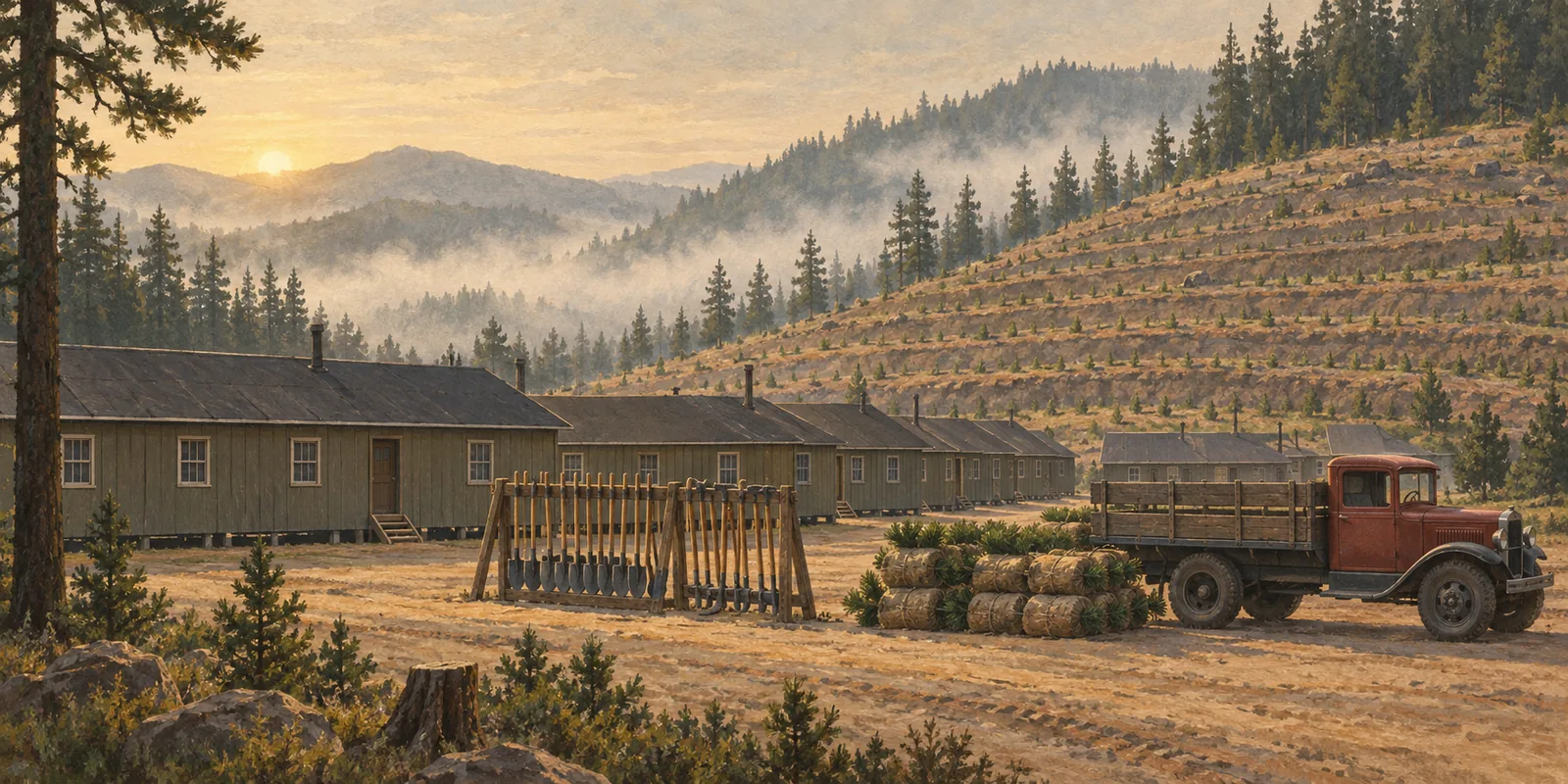
Fair enough. I never won an argument with a blueprint, and neither will you. In my administration, we did not lecture the country out of the Depression. We hired it. We handed four million young men2 a shovel through the Civilian Conservation Corps and planted three billion trees. We did not ask the unemployed to feel better; we asked them to build the tributaries of the Tennessee Valley,3 and the feeling followed the work. So this third letter is not a meditation. It is a field manual. Four tools, in the order they should be picked up.
I. The First Tool: The Local Ledger
Begin where the map is still legible. The national conversation has been captured, monetized, and weaponized — you will not win it back by shouting louder into a captured megaphone, and you will go mad trying. But the school board has no algorithm. The municipal council meets on Tuesdays, in a room with folding chairs, where the worst that can happen to you is boredom. The county commission, the library board, the drainage district, the precinct — this is the surface area of the Republic that still responds to pressure applied by hand.
You have been convinced that local government is small. It is nothing of the kind. It is where the schools are run, the sheriffs are elected, the ballots are administered, the water is tested, and the land is zoned. The forces you fear have understood this for forty years, which is precisely why they built their machine from the school boards upward while everyone else was watching the television. Power abhors a vacuum, and it has been filling the local void at a mile a decade.
You do not retake a country. You retake a county — and then another one.Attend one meeting a month. Learn the three or four names of the people who actually run your town. Read the budget — the budget is the confession of priorities that no press release survives. And when the position opens, take it. The Republic does not need you to have opinions about Washington. It needs you to occupy the folding chair.
II. The Second Tool: The Repair of the Shared Map
In the first letter, I told you that no nation can build until it agrees on where the solid earth lies — that the shovel is useless if you cannot agree where the dirt is. Here is what that looks like as practice rather than principle.
The two countries — the one in the newspapers and the one outside the window — will not be reconciled by fact-checkers, because fact-checkers are themselves cast as combatants in the story. They will be reconciled, slowly and unevenly, at the scale where facts still have faces. Your neighbor who believes the election was stolen will not be argued out of it by a network anchor. But he has watched you, and he knows whether you are a liar. That is the last currency of trust in circulation, and it is redeemable only in person.
- Go to the source, and drag others with you. Not to argue — to observe together. Attend the canvassing board. Watch the count. The antidote to the stolen-election myth is not a rebuttal; it is a citizen standing in the room where the counting happens, ten thousand times over. Sunshine was my administration's first metaphor4 for a reason: the process witnessed is the process trusted.
- Starve the outrage mill on your side of the fence too. A shared map requires both parties to stop paying cartographers who profit from forgery. The click you give the loudest liar on your own team funds the same exhaustion economy. Discipline is not censorship; it is diet.
- Separate the man from the myth, out loud. The neighbor is not the movement, and the movement is not the neighbor. Every family in the 1930s that came apart over the radio demagogues came apart because someone decided Grandpa was Father Coughlin.5 Hold the line against the lie while leaving the door open to the liar's brother. This is not softness. It is siege arithmetic: you cannot out-breeding-rate a majority that you are busy excommunicating.
III. The Third Tool: Institutional Immunization
The second letter's hardest lesson was that the distance between adjacent and arrived is measured in exactly one thing: the institutions that survive the siege. The courts that still rule against the man. The states that still run their own elections. The auditors who still audit. Those institutions are not defended by admiring them. They are defended by staffing them.
Every safeguard the machine has removed was a job somebody used to do. The inspector general is a profession. The election administrator is a profession. The poll worker is a Tuesday. The Republic's immune system is not an abstraction — it is a payroll, a volunteer roster, and a bench of lawyers who took an oath they meant. When the watchdogs are purged, the answer is not to lament the kennel. It is to become the next litter.
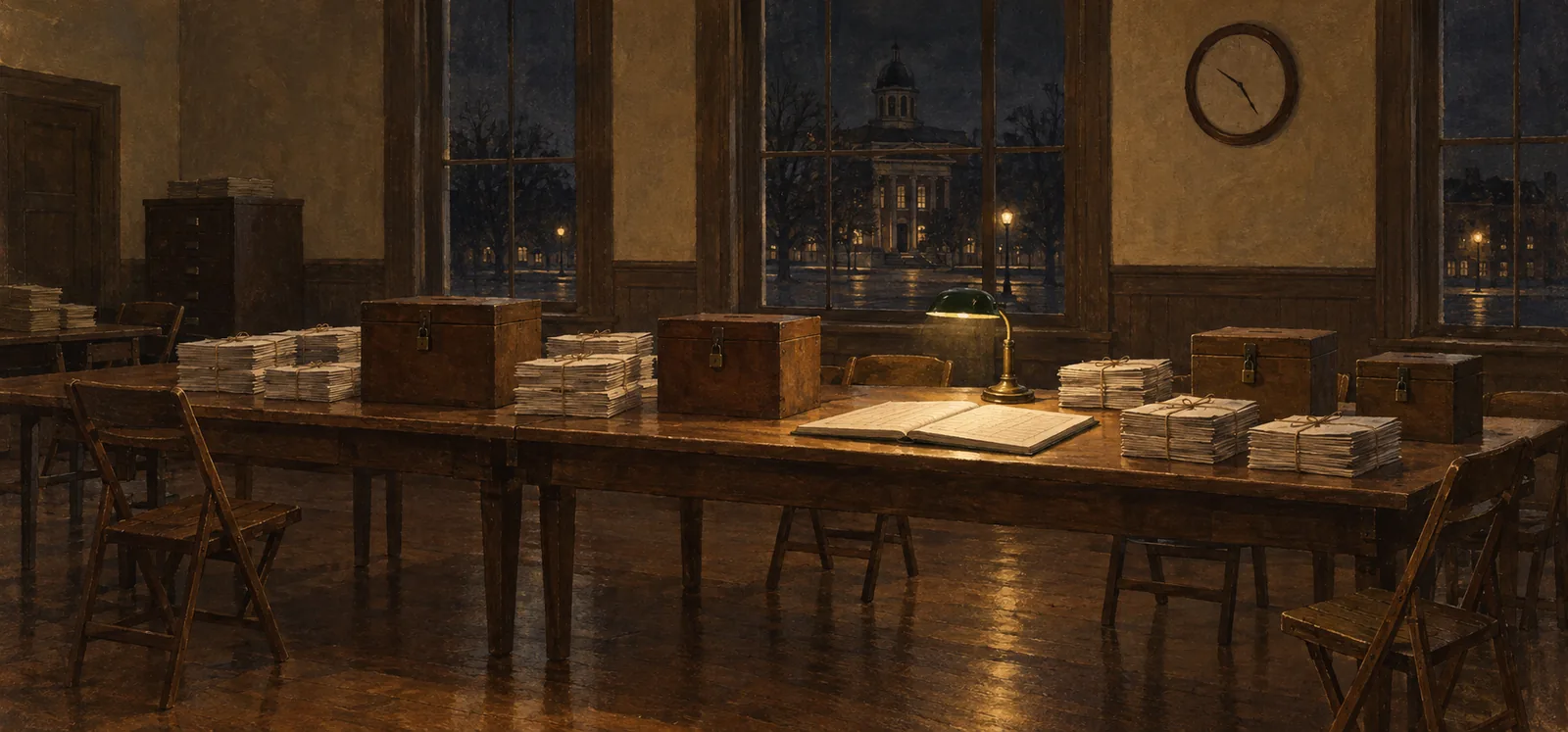
- Work the elections. Be a poll worker, a poll watcher, a count observer. A republic that cannot staff its own elections has already conceded them to whoever shows up. Be the one who shows up.
- Staff the law. If you are a lawyer, the legal aid clinics, the election-protection hotlines, and the county bar need you more than the firm does. Every autocracy in history has been a contest over the meaning of paperwork. Someone has to win that contest at the level of the filing.
- Fund the boring. Local journalism is not a charity; it is the sensory apparatus of self-government. A town without a reporter is a town governed by rumor. Subscribe, or start the newsletter yourself. The five hundred citizens who read the county commission minutes are worth more to the Republic than five million who watch the national scream.
- Run for the low office on purpose. The district attorney, the secretary of state, the judge of the probate court — these modest titles certify elections, prosecute crimes, and administer the machinery the strongmen must capture first. The other side figured this out in 2016. It is not too late, but it is late.
IV. The Fourth Tool: The Discipline of the Long Haul
Now the warning that belongs inside every field manual, because manuals without warnings produce casualties.
This repair will not be finished in a season, and the expectation that it should be is itself one of the diseases. The exhaustion economy runs on a simple arbitrage: it sells you a crisis every hour and a resolution every four years, and it bankrupts you when neither arrives. The restoration of a Republic is generational work — slower than a war, quieter than an election, and measured in decades of Tuesdays. The men who cleared the ditches in 1933 did not live to see the interstate.6 They dug anyway, because the dig was the point. The rent on liberty is not an annual payment, and it is never paid in full. It is a lease with rent due daily, collected in patience.
Guard therefore against the three counterfeit currencies of the long haul. Cynicism, which tells you the dig is pointless and charges you nothing to quit — it is the only philosophy whose entry fee is zero because its wages are also zero. Nostalgia, which tells you the answer lies behind you, in a republic that never existed, and so sends you digging in a place where no road can be built. And saviorism, which tells you to wait — for the candidate, the court, the indictment, the miracle — and to mistake the waiting for the work. There is no man on a horse7 coming. There is a night shift, and you are on it.
Do not wait to be rescued. The Republic has never once been rescued. It has only ever been maintained.
V. The Night Shift
In 1940, with the world's lights going out one capital at a time, this country put its factories on three shifts, and the one that mattered most was the one nobody saw — the night shift, the one that worked while the country slept, and produced the arsenal8 quietly, without applause, before there was any certainty at all that the work would matter. Nobody on that shift knew they were in the good part of the story. They were simply in the part of the story that made the good part possible.
That is your assignment. You are not guaranteed the triumphal chapter. You are assigned the chapter before it — the meetings, the counts, the filings, the subscriptions, the folding chairs, the Tuesdays. The engine of this Republic has always been idled or restarted by exactly this labor, performed by citizens who did not consider themselves historical, because the historical never do.
So here ends the trilogy, and here is the summing of it. The first letter named the storm: fear as commodity, nostalgia as false shelter, and the shattered map. The second read the instruments: empires die twice, paper without fleets invites appetites, and the commissar's mechanics wear any uniform that fits. This third letter hands you the toolkit: the local ledger, the shared map, the staffed institution, and the patience to work all three in the dark.
The wheel is in your hands. The instruments are in front of you. The map can be redrawn, and only you can redraw it — not by winning the argument of the age, but by holding the county, the count, and the chair.
Check your six. Trust the artificial horizon over your stomach.9 And fly the plane — through the weather, on the night shift, for as long as it takes.
The rent is due tomorrow.10 See you at the meeting.